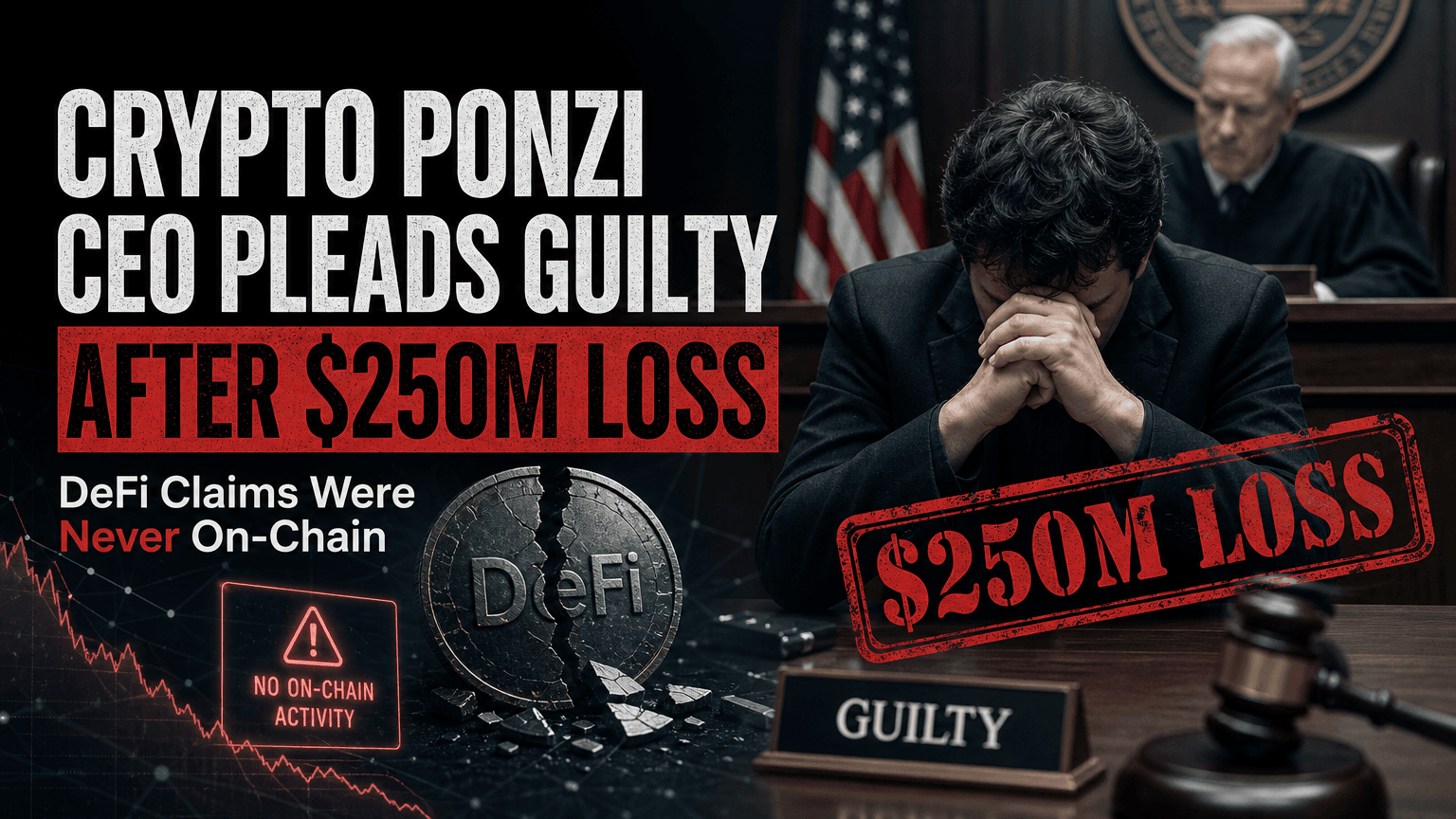
Crypto Ponzi CEO Pleads Guilty After $250M Loss: DeFi Claims Were Never On-Chain
Goliath Ventures' Ponzi Scheme: A Deep Dive into Deceit and DeFi
The financial world was shaken by one of the largest crypto Ponzi schemes in recent U.S. history, led by Christopher Alexander Delgado. With a bag full of fraudulent promises, Delgado managed to collect a staggering $400 million from hopeful investors, most of which never saw the light of real investment. This article delves into the intricate details of Delgado's scheme, unraveling the web of deceit that used the veil of decentralized finance (DeFi) to pull wool over the eyes of investors.
Mechanics of the Fraud: From Goliath Ventures to Uniswap
Goliath Ventures, originally Gen-Z Venture Firm, slickly marketed itself as a sophisticated player in the DeFi space. Its pitch was straightforward yet enticing: deploy investor capital into cryptocurrency liquidity pools on platforms like Uniswap to generate substantial monthly returns of 3 to 8 percent. However, the firm anchored its success on one pivotal expectation - investors' ignorance of blockchain transparency. Despite the accessible nature of Ethereum-based transactions, which can be verified using etherscan.io, Delgado deceived many into believing their funds were actively generating yields.
The Deceptive Use of DeFi Jargon
Fundamentally, a real liquidity pool on Ethereum involves participants depositing cryptocurrency tokens into a blockchain-resident smart contract, where trades are executed by an automated market maker. Here, liquidity providers earn transaction-based fees, all openly recorded on the blockchain. Goliath Ventures managed to hide its meager $1.5 million involvement in such pools versus the promised $400 million, a discrepancy that any investor could have unveiled with a simple blockchain search.
Exploiting DeFi's Transparent Nature
While the very design of DeFi products ensures transaction transparency, Delgado's scheme thrived on the investors' technical naivety. Rather than necessitating audits or official oversight to highlight discrepancies, the true figures were hidden in plain sight for any technologically savvy individual to discover. However, without awareness or knowledge on how to verify such claims, many investors simply took Goliath's DeFi promises at face value.
Bank and Institutional Oversight Failures
A significant portion of Goliath's operations involved maneuvering investor funds through various bank accounts, a practice provoking anti-money laundering flags. Leading banks, including JPMorgan Chase, facilitated transactions amounting to hundreds of millions before internal suspicions culminated in account closures. Litigation to determine whether banks failed their fiduciary duties is ongoing, notably interpreting whether JPMorgan overlooked indicators of a Ponzi operation.
Tracing the Misappropriated $400 Million
The practical outcomes for defrauded investors are grim; bankruptcy proceedings against Goliath Ventures revealed liabilities masking any assets capable of substantial restitution. The orchestrated web of deceit funded wants rather than investment portfolios – lavish lifestyle purchases and grand events designed to maintain the façade of legitimacy.
Guidance for Future Investors
The Goliath Ventures incident is emblematic of broader vulnerabilities investors face within the realm of cryptocurrency and DeFi. Investors should practice due diligence by verifying claims of cryptocurrency yield products, utilizing free blockchain explorers to ensure purported activities exist on-chain. Unrealistic promises, such as high fixed monthly returns, should immediately trigger scrutiny. The availability of transparent verification tools empowers prospective investors to assess real-time positions and mitigate falling prey to fabricated schemes.
Conclusion: Prevention over Repentance
The Goliath Ventures saga underscores the critical importance of investor education in an era where financial decentralization intersects with digital innovation. As the thirst for high returns within cryptocurrency continues to grow, the case serves as a precautionary tale. It reminds investors to embrace skepticism, validate claims, and understand the underlying technologies of their investments. Failure to adapt may ensure that, much like in the Goliath incident, substantial funds will end up fueling deceptive opulence rather than legitimate opportunity.
03.07.2026