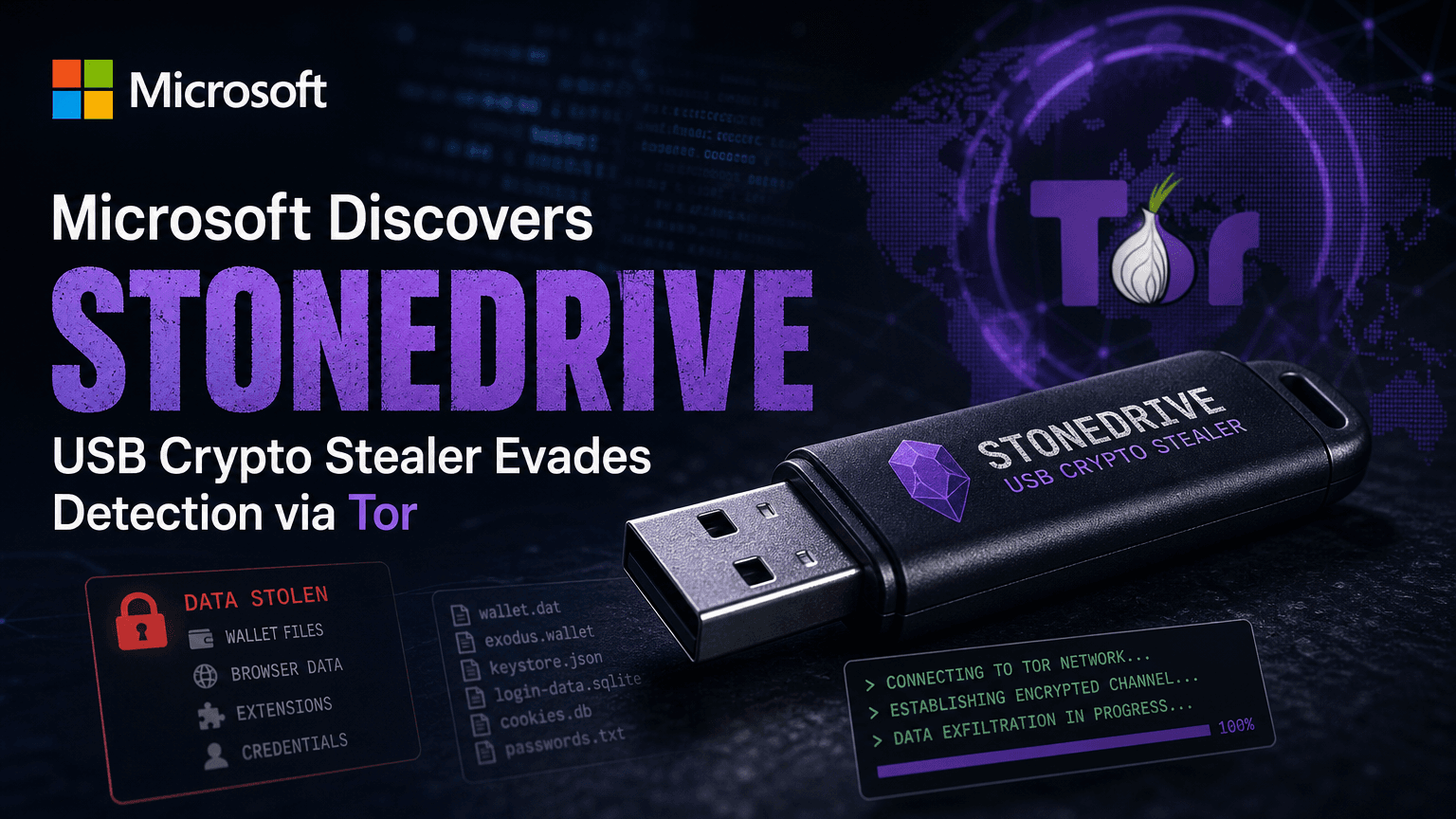
Microsoft Discovers STONEDRIVE: USB Crypto Stealer Evades Detection via Tor
Introduction to Cryptocurrency Stealer Malware
Microsoft has recently uncovered a sophisticated strain of cryptocurrency stealer malware that poses a significant threat to digital asset holders. This malware, primarily spread through infected USB drives, leverages both traditional and advanced techniques to exfiltrate sensitive information from compromised systems. The threat, tracked by Microsoft as STONEDRIVE, combines the old-school approach of USB propagation with modern evasion techniques, effectively targeting environments where digital assets are stored.
How STONEDRIVE Propagates
The discovery reported by Slashdot sheds light on the propagation methods employed by STONEDRIVE. Reminiscent of the classic USB worm propagation model popularized by threats like Conficker over a decade ago, STONEDRIVE uses infected USB drives as its primary vector. This method allows the malware to spread by copying itself onto any removable media inserted into an infected machine. Consequently, when the USB drive is connected to another computer, the autorun.inf file and associated executables automatically trigger infection if autorun features are enabled or if users interact with disguised folders.
Malware Behavior and Targeting Capabilities
Upon successful infiltration, STONEDRIVE exhibits characteristics common to many information stealers. It scans compromised systems for cryptocurrency wallet files, browser extension data, and stored credentials. The malware specifically targets popular wallet applications like Electrum, Exodus, and MetaMask. Additionally, it captures browser cookies, saved passwords, and autofill data that might contain seed phrases or private keys. The collected information is then exfiltrated through Tor hidden services, posing significant challenges in attribution and takedown efforts.
Evasion Techniques and Obfuscation
To avoid detection and prolong its operational lifespan, STONEDRIVE employs multiple layers of obfuscation. The malware's initial dropper uses a staged approach with encrypted payloads, each decoding the next only after thorough checks for analysis environments. Anti-analysis routines ensure the malware remains dormant or eliminates itself when virtual machines or sandbox tools are detected. This focus on evasion explains the prolonged operation of the campaign before it came under the scrutiny of security teams.
USB Spreading in Air-Gapped Environments
The choice of USB-based spreading is a deliberate strategy by the attackers to target air-gapped systems or networks with stringent internet controls. Such environments are often found in corporate settings, research facilities, and some cryptocurrency trading firms where isolated machines are used for signing transactions. By infecting USB drives, the malware bridges the gap between isolated networks and internet-connected systems, where the exfiltrated data is then sent through Tor.
Advantages of Using the Tor Network
The use of the Tor network provides numerous benefits for the operators behind this campaign. Tor's onion routing effectively conceals the true location of command-and-control servers while encrypting traffic in a manner that challenges standard security inspection tools. Microsoft noted that STONEDRIVE uses hardcoded Tor addresses, bypassing DNS resolutions that might otherwise trigger alerts. The malware communicates only at predetermined intervals, minimizing its network footprint and making behavioral detection arduous.
Data Harvested and Potential Intelligence Gathering
The analysis of exfiltrated data revealed the use of structured JSON payloads comprising wallet addresses, private keys, and screenshots captured from compromised systems. Intriguingly, the malware possesses capabilities to activate the victim's webcam and microphone under certain conditions, indicating a potential interest in gathering intelligence beyond purely financial motives. Some samples further include modules for keylogging and clipboard monitoring, with a focus on cryptocurrency address strings to perpetrate clipboard hijacking techniques.
Mitigation and Prevention Measures
Microsoft has coordinated with law enforcement agencies and disseminated indicators of compromise through its Threat Intelligence Center. Organizations are advised to disable autorun features across Windows systems and implement policies preventing USB drives from automatically executing files. Regular employee training about the risks associated with unknown USB devices is crucial, especially in sectors dealing with valuable digital assets.
Potential Supply Chain Risks and Sectoral Impact
The threat posed by STONEDRIVE extends beyond individual infections, raising concerns about supply chain risks within the cryptocurrency sector. Developers receiving infected USB devices from conferences or partners risk inadvertently propagating the malware to build environments. If signing keys or seed phrases are compromised, the financial consequences could be severe. Numerous blockchain projects have reportedly re-evaluated their internal USB usage policies following Microsoft's disclosure.
Future Monitoring and Preparedness
As researchers continue to monitor for new variants, organizations must remain vigilant. The modular design of STONEDRIVE enables easy updates, allowing the operators to enhance their toolset without significant backend reinvention. Future versions might include ransomware capabilities or integrate into larger botnets to amplify distribution. Organizations should consider implementing strict USB control policies, application whitelisting, and network segmentation to mitigate potential damage.
Conclusion: A Wake-Up Call for the Digital Economy
Microsoft's findings highlight the ongoing challenges of balancing convenience with security in cryptocurrency management. Despite the evolving attack surfaces, older vectors like USB remain effective avenues for threat actors. The combination of USB propagation with anonymous network protocols like Tor presents a formidable threat profile. Security teams must update detection rules and educate users about lingering USB risks, while cryptocurrency users should adopt enhanced security measures to safeguard their digital assets.
The STONEDRIVE campaign serves as a stark reminder that threat actors are adept at studying historical malware successes and adapting them for contemporary targets. With the increasing adoption of blockchain technology in traditional finance and supply chain applications, the incentive for sophisticated stealing operations continues to grow. Collaboration between security vendors and law enforcement, coupled with user awareness, will be pivotal in disrupting these campaigns before they wreak havoc on the burgeoning digital economy.
22.06.2026