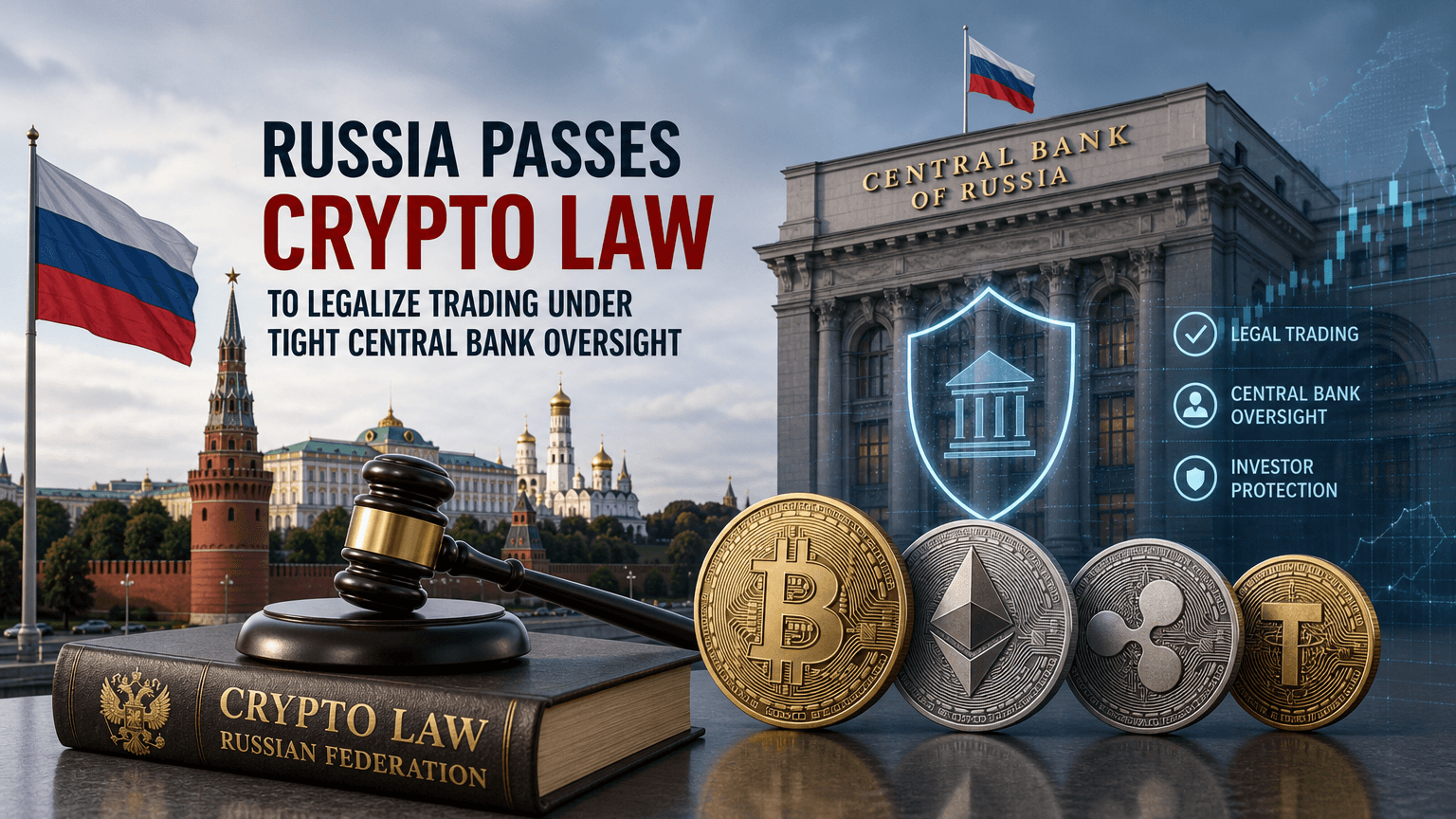
Russia Passes Crypto Law to Legalize Trading Under Tight Central Bank Oversight
Russia's Cryptocurrency Legislation: A New Era for Digital Asset Trading
In a landmark move, Russia has enacted a comprehensive law establishing a legal framework for cryptocurrency trading. This legislation marks a significant step in the nation's approach to digital assets, as it provides a structured environment for the buying and selling of major cryptocurrencies under the scrutiny of the Central Bank. However, while facilitating international trade, the law maintains a strict ban on the use of cryptocurrencies for domestic transactions.
Kremlin's Strategy: Balancing Control and Innovation
The adoption of this legislation reflects the Kremlin's strategy to integrate cryptocurrency trading into the formal financial system while keeping a tight grip over it. For years, the Russian authorities have debated the role and regulation of cryptocurrencies within their borders. The motivation behind this move partially stems from the necessity to circumvent Western sanctions that have limited Russia's access to the global financial infrastructure. Cryptocurrencies offer an alternative avenue for cross-border trade, which is becoming increasingly vital for the Russian economy.
Framework of the New Cryptocurrency Market
The new framework draws parallels with the existing securities market in Russia. It mandates that all exchanges, brokers, custodians, and related service providers must secure licenses from the Central Bank by July 1, 2027. This ensures a controlled market environment, setting standards for compliance, transparency, and investor protection. By doing so, Russia aims to legitimize the cryptocurrency market while aligning it with other financial sectors subject to regulatory oversight.
Restrictions on Domestic Use and Investor Participation
Despite allowing cryptocurrency trading, the legislation firmly prohibits using digital currencies as a payment method within the country. This restriction underscores the Russian government's cautious approach toward cryptocurrencies, whose decentralized nature can be seen as a challenge to state-controlled financial systems. Instead, individuals can engage in buying and selling activities only through certified entities that operate under the Central Bank's supervision.
Retail Investor Regulations
For retail investors, the law introduces a requirement to pass a knowledge test before engaging in cryptocurrency trading, ensuring they are aware of the risks and dynamics involved. Additionally, non-qualified investors, which encompass about 98% of Russian traders according to the Central Bank, face a yearly cap on cryptocurrency purchases, restricted to 300,000 rubles (approximately $3,840) per intermediary. Such measures aim to protect retail investors from excessive exposure and potential losses in the volatile digital asset market.
Integration with Existing Financial Systems
The legislation stipulates that all cryptocurrency transactions, custody, and record-keeping must occur within this regulated framework. By legalizing cryptocurrency exchange services and digital custodians, the law provides a pathway for existing market entities to formalize their operations. These participants have until July 1, 2027, to acquire the necessary licenses, which ensures a smooth transition towards a regulated cryptocurrency environment.
Conclusion: A Controlled Embrace of Cryptocurrency
In conclusion, Russia's new cryptocurrency legislation signifies a controlled embrace of digital asset trading within the context of state oversight. While empowering the use of cryptocurrencies in international trade to counteract economic sanctions, the law stresses strict regulation for domestic engagement. By doing so, Russia hopes to harness the benefits of blockchain technology while mitigating risks associated with its inherent volatility and decentralized nature.
23.07.2026