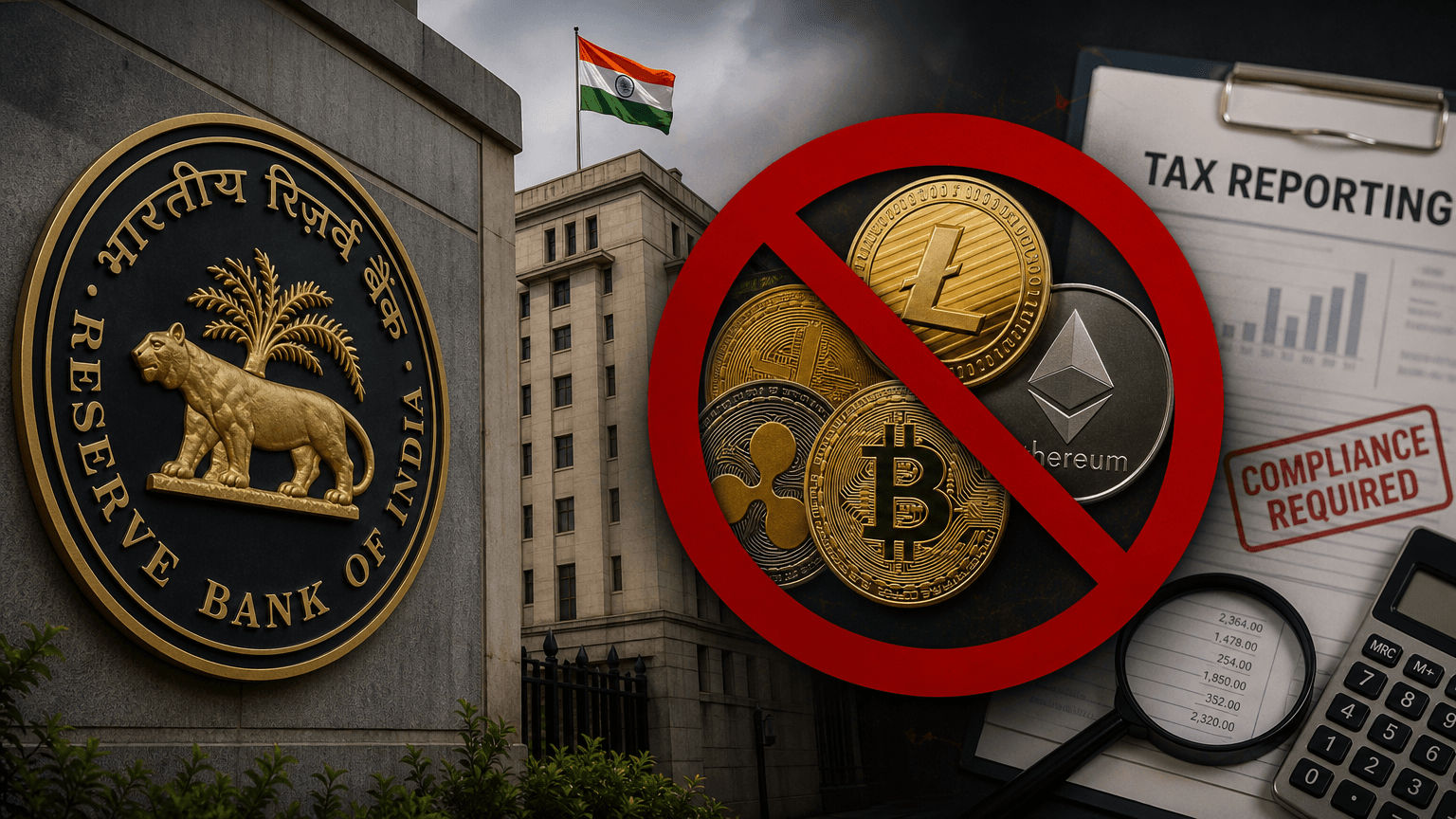
India's RBI renews anti crypto stance as tax reporting concerns persist
India's Cryptocurrency Policy: A Renewed Push for Regulation and Taxation
In an era where digital transformation is redefining financial landscapes globally, India stands at a critical juncture with regard to cryptocurrency regulation. Recent discussions within the government have spotlighted two primary concerns: the Reserve Bank of India's (RBI) persistent advocacy for a cryptocurrency policy inclined towards prohibition and the challenges faced by tax authorities in enforcing crypto tax regulations. Both issues underline the complexities of integrating or regulating a burgeoning digital asset class without compromising financial stability or tax compliance.
RBI's Consistent Stance on Cryptocurrency and Stablecoins
The Reserve Bank of India, in recent documents, has maintained its firm stance on keeping cryptocurrencies and privately issued stablecoins outside the ambit of the regulated financial system. The central bank's primary argument is rooted in the potential risks these digital assets could pose to the financial system's integrity and stability. It argues that excluding such assets could mitigate the risk of financial contagion—a scenario where crypto market instability could ripple into the broader financial sector.
Furthermore, the RBI remains particularly wary of stablecoins, especially those backed by foreign currencies. The central bank suggests that such assets could undermine India's monetary sovereignty and pose risks during times of economic stress. Additionally, with stablecoins reducing the need for conversion to fiat currency, the RBI believes that crypto profits might evade traditional tax detection mechanisms—posing a significant challenge given that India currently taxes cryptocurrency gains at a rate of 30%.
Challenges in Tax Compliance and Reporting
On the taxation front, India's Income Tax Department has expressed concerns over substantial gaps in cryptocurrency transaction reporting. Internal reviews have revealed that less than one fourth of the approximately 645,000 individuals who transacted in cryptocurrencies in the financial year ending March 2023 reported these dealings in their income tax returns. This lack of comprehensive reporting is exacerbated by the use of overseas exchanges and private digital wallets that make tracing transactions and identifying beneficial owners challenging.
The department also highlighted that fluctuating crypto prices and the absence of uniform valuation standards complicate tax assessments. Such challenges have persisted despite previous regulatory efforts, including the Financial Intelligence Unit's recent directives to major crypto exchanges to maintain detailed transaction records as part of an intensified anti-money laundering drive.
Unresolved Policy Debate Amidst Growing Market Activity
The discourse over India's cryptocurrency policy remains unresolved, even as the country watches its cryptocurrency market expand substantially. Since the Supreme Court nullified the RBI's 2018 banking prohibitions in 2020, the policy framework has been in flux. A draft bill proposing a ban on private cryptocurrencies surfaced in 2021 but has not yet been tabled in Parliament, while a crucial government discussion paper has faced repeated delays.
Even without a dedicated crypto law, India's approach to taxation and existing regulations appears to have somewhat contained the risks so far. Nevertheless, authorities continue to express concerns over regulatory insufficiencies jeopardizing financial stability. Despite these apprehensions, India remains one of the leading cryptocurrency markets worldwide, a testament to the significant and growing interest in these digital assets.
The Road Ahead: Balancing Innovation and Regulation
As India contemplates its long-term strategy for cryptocurrency regulation, it is essential to strike an optimal balance between fostering innovation and ensuring adequate regulatory oversight. The Ministry of Corporate Affairs' exploration of accounting standards and practices for virtual digital assets indicates a move towards more structured engagement with cryptocurrencies.
While the road ahead is fraught with challenges, the opportunity for establishing a robust regulatory framework that safeguards financial stability while enabling technological progress is an enticing prospect for policymakers and stakeholders alike. How India navigates this complex terrain could have far-reaching implications not only for its financial system but also for the global cryptocurrency narrative.
09.07.2026